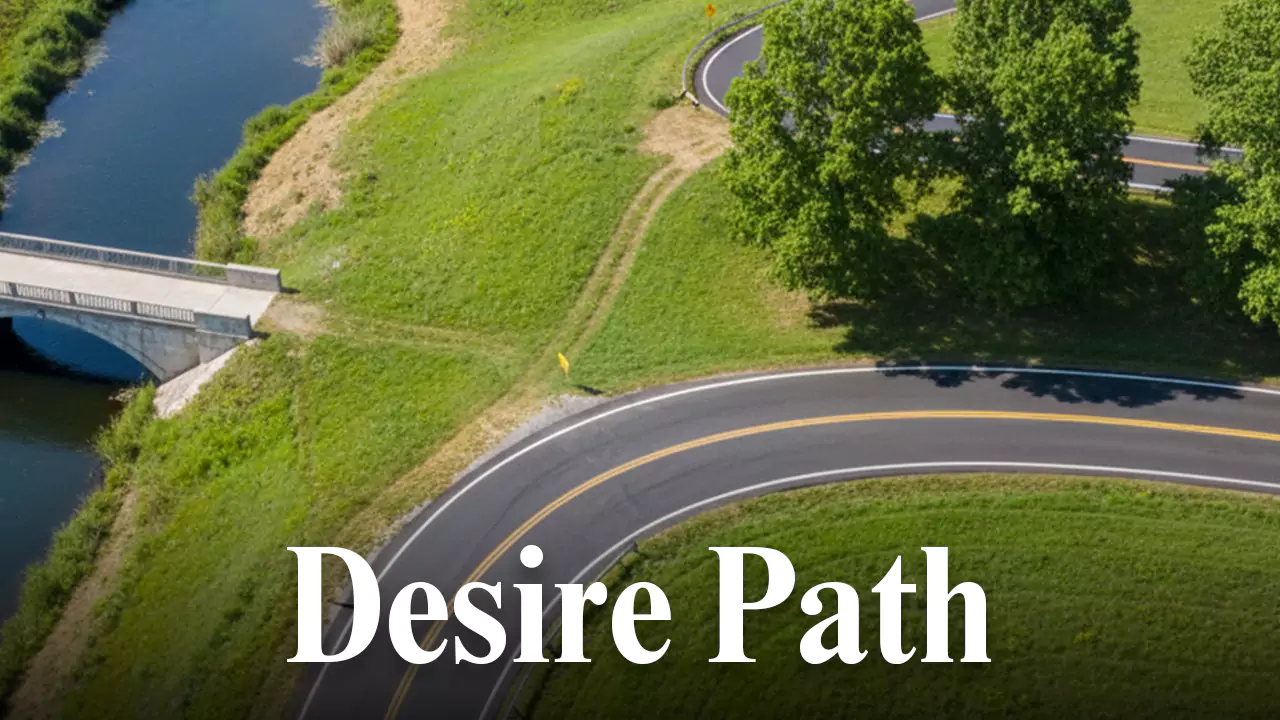
Have you ever walked through a well-manicured park or university campus? Picture a sprawling green lawn, adorned with beautiful winding paving block paths, designed to delight the eyes of anyone passing through. Everything looks perfect, the result of careful planning. Yet, amidst this beauty, there’s often something that seems out of place, something that appears to mar the scenery: a thin brown trail cutting straight across the grass.
This dirt path looks contrasting, like a pencil stroke on an oil painting. The trail is concrete evidence that hundreds or even thousands of people choose not to follow the official winding path, preferring instead to cut straight across the grass. We might think this is the work of impatient people or those who don’t care about beauty. But what if this simple trail actually holds a much deeper message about fundamental human nature and how we interact with the world around us? This phenomenon actually has a name and a very interesting explanation. What exactly is happening here?
Discussion
Historical Origins and Definition
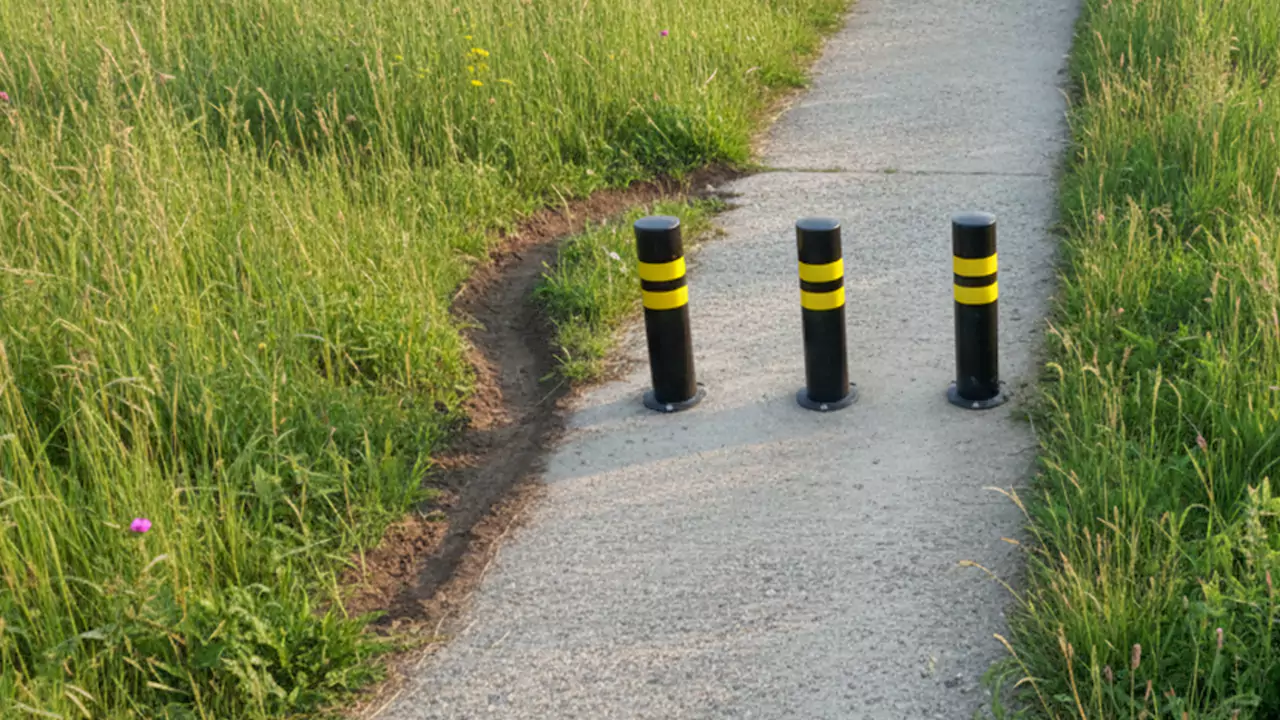
That dirt trail you’ve probably walked on countless times actually has an official name in the world of architecture and urban planning. It’s called a Desire Path, and its story begins with someone you’ve probably never heard of before.
Meet Myra J. Hird, an architect who in the 1960s was grappling with a simple yet profound question about sustainable urban planning. While studying how cities could be designed more thoughtfully, she became fascinated by these informal trails that seemed to appear everywhere. What struck her most was how these paths formed without any planning whatsoever. Imagine thousands of people unconsciously collaborating to create the most logical route, one footstep at a time.
But here’s where it gets really interesting. This phenomenon isn’t some modern quirk of impatient urbanites. These human-made shortcuts have been shaping civilizations for millennia. The famous Silk Road that connected Asia and Europe? It started as countless individual Desire Paths created by merchants and travelers who instinctively chose the most efficient routes. Archaeologists regularly uncover ancient Desire Path remnants that eventually became the major highways of entire civilizations. It makes you wonder what other “obvious” solutions we’ve been walking on without realizing their significance.
The Psychology Behind Trail Formation
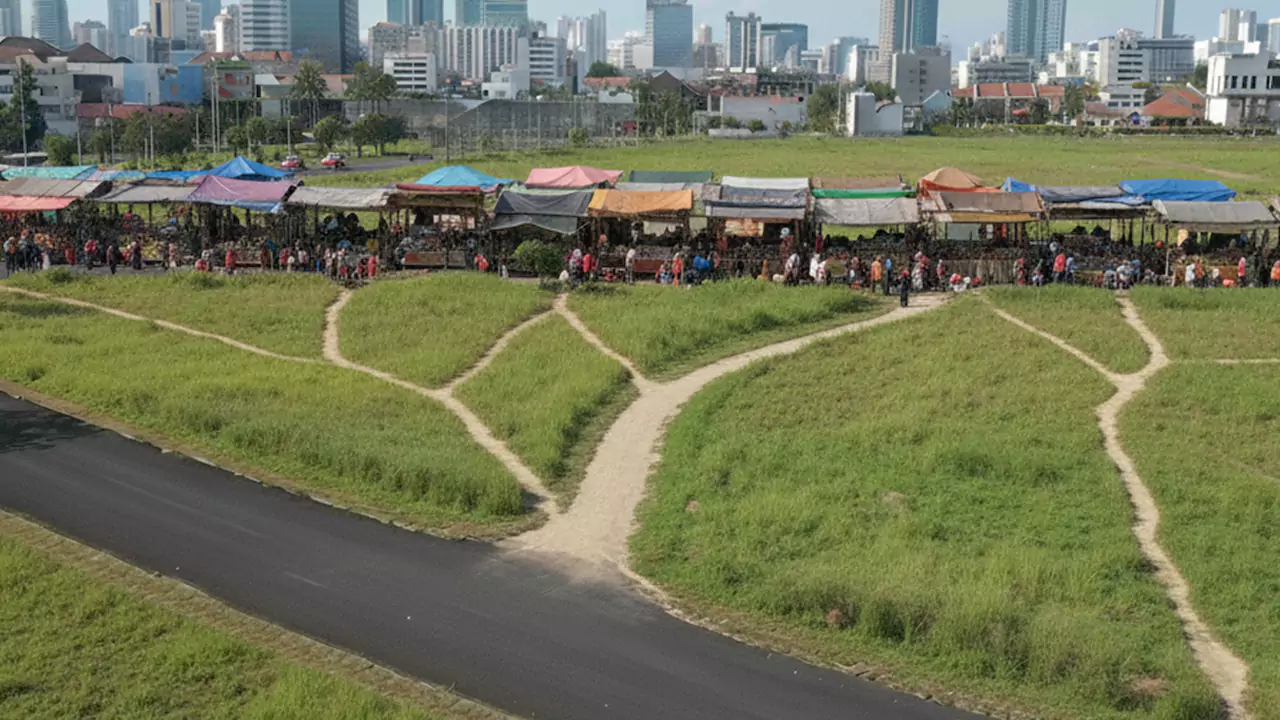
So why does the human brain consistently seek shortcuts when walking across grass? Is it simply laziness, or is something more sophisticated happening beneath our conscious awareness?
It turns out there’s a simple yet powerful psychological principle that explains this behavior. It’s called the “principle of least effort.” Humans naturally choose the most efficient way to achieve their goals. This behavior reflects how our brains are programmed to conserve energy.
When we see a grassy area with an official path that winds far around, our eyes automatically perform what’s called “visual scanning” to find the shortest route. Research in spatial cognition shows that the human brain is remarkably skilled at calculating distances and estimating travel time just by looking.
What’s fascinating is the phenomenon of “path following behavior” in social psychology. When someone sees faint traces in the grass, they tend to follow those traces because our brains interpret them as “tested routes.” This is a very basic form of social proof where we follow the behavior of others who have already tried something.
There’s also a visual psychology aspect at play. Human eyes are naturally drawn to straight lines and simple patterns. Winding beautiful paths might be pleasant to look at, yet our brains will still seek and be more attracted to straight lines connecting two points. This reflects an automatic response from our visual system, rather than a conscious decision.
How Footprints Become Permanent Paths
Have you ever noticed how a dirt trail across grass forms gradually? The process is actually quite fascinating when you observe it closely.
Initially, one or two people start cutting across the grass. The soil beneath begins to get slightly compressed and the grass starts to wither. When others see these faint traces, they tend to follow the same route because it appears to be an “existing path.” Over time, as more people use the trail, the grass becomes increasingly damaged and the soil more compacted.
What’s interesting is that Desire Paths have a tendency to self-correct. If a formed path turns out to be inefficient, people naturally create a new, better route. If the old path becomes too muddy during rain, an alternative path will emerge beside it. It’s like a natural navigation system that continuously evolves based on ground conditions.
Some researchers have even observed that Desire Paths in dry season and rainy season can differ in their locations. People unconsciously adjust their routes based on soil conditions and weather. This shows how adaptive humans are in creating transportation solutions.
Management Responses to Dirt Trails
Now here’s where things get interesting from a management perspective. When park or campus administrators see brown dirt trails cutting through their beautiful green lawns, what should they do?
The most common response is usually to install small fences or prohibition signs to prevent people from walking on the grass. Some try replanting grass over the trail, hoping people will stop taking shortcuts. But what often happens is that new Desire Paths emerge nearby, or people continue using the same route despite the replanted grass.
A wiser approach is being adopted by some smart managers. They’re beginning to see Desire Paths as valuable data about how people actually want to move through space. Instead of fighting it, they accommodate this desire by building permanent walkways right over the formed Desire Paths.
Universities like Virginia Tech and Ohio State University even employ a waiting strategy. They deliberately don’t build pedestrian paths in certain areas during the first semester, allowing students to create natural Desire Paths, then build permanent sidewalks over the most frequently traveled routes. The result is pedestrian paths that truly meet user needs.
Digital Applications
Interestingly, the Desire Path concept also appears in the digital world. Have you ever noticed your own behavior when using apps or websites? Chances are, you’re creating digital Desire Paths without even realizing it.
Think about the last time you visited a major e-commerce site like Amazon. Did you browse through categories methodically, or did you immediately head straight for the search bar? If you chose the latter, you’ve just demonstrated a digital Desire Path in action. UX analysts now actively hunt for these patterns to improve their application and website designs.
Social media platforms like TikTok have actually evolved around this principle. The “For You Page” algorithm is essentially an attempt to create personalized Desire Paths by eliminating unnecessary navigation steps and serving up content you’re most likely to engage with. Amazon’s “one-click purchasing” feature represents another example of how companies accommodate users’ desire to take shortcuts in online shopping.
Conclusion
Desire Paths are ultimately not problems to be fixed or grass to be replanted. Instead, they are solutions that emerge organically. This phenomenon teaches us a valuable lesson about the importance of empathy in designing anything, whether it’s public spaces, digital products, or work systems.
Rather than scolding people who “damage” the grass, wise designers will see these trails as very valuable data. They will ask, “Why do people choose this path?” The answer will often lead to design improvements that are more humane and effective.
Some smart park managers eventually build permanent walkways right over existing Desire Paths. They don’t fight human nature, but embrace it. Universities like Virginia Tech and Ohio State University have applied this approach with very positive results—more efficient pedestrian paths and higher user satisfaction.
In an era where user experience is becoming increasingly important, Desire Paths remind us that the best design isn’t what looks most beautiful on paper or what’s most theoretically elegant, but what’s most aligned with how humans actually live, think, and move. Sometimes, the greatest wisdom lies in the ability to listen to what’s being said by the footprints of thousands of people who have walked before us.